

How to Choose Inflatable Bridge Void Formers for Hollow Slabs and Box Girders
Choosing the right inflatable bridge void formers is an important step in the production of hollow slabs, box girders, bridge beams, culverts, and other precast or cast-in-place concrete components with internal cavities. The correct inflatable void former helps maintain cavity geometry, reduce concrete consumption, control component weight, simplify demolding, and improve production efficiency.
However, inflatable bridge void formers should not be selected only by length and diameter.
The correct void former must match the concrete member geometry, internal cavity shape, reinforcement layout, concrete placement height, working pressure, restraint method, expected reuse cycles, and demolding conditions.
For hollow slabs, the inflatable bridge void former must provide stable dimensional control while remaining easy to remove through limited openings. For box girders, the inflatable void former may need greater length, higher structural stability, stronger reinforcement, and more precise positioning to resist fresh concrete pressure and buoyancy.
This guide explains how to choose inflatable bridge void formers for hollow slabs and box girders, including size, shape, materials, working pressure, reinforcement, concrete cover, anchoring, demolding, durability, reuse, maintenance, and procurement information.
Inflatable bridge void formers are flexible reusable internal molds used to create hollow cavities inside concrete bridge components.
They are commonly manufactured from reinforced rubber or rubber-fabric composite materials.
Before concrete placement, the inflatable bridge void former is inserted into the reinforcement cage and inflated with air.
Once inflated, the former becomes sufficiently rigid to maintain the required cavity shape.
Concrete is then poured around the inflated mold.
After the concrete reaches enough early strength, the inflatable bridge void former is deflated and removed.
The completed concrete element contains a hollow internal cavity.
Inflatable bridge void formers are commonly used in:
Hollow slabs
Box girders
Precast bridge beams
Hollow-core bridge decks
Culverts
Tunnel sections
Municipal concrete structures
Industrial precast components
They are also referred to as inflatable rubber mandrels, inflatable core molds, bridge hollow core molds, rubber inner molds, and inflatable concrete void formers.
Hollow concrete structures are widely used because they reduce dead load while maintaining external structural geometry.
Removing unnecessary concrete from the center of a slab or girder can reduce:
Concrete consumption
Structural self-weight
Transportation weight
Crane demand
Foundation load
Inflatable bridge void formers make it possible to create these internal cavities without leaving permanent formwork inside the structure.
For hollow slabs, the void former creates a longitudinal cavity through the concrete member.
For box girders, the inflatable void former may create a larger or more complex internal hollow section.
The ability to deflate the former before removal is especially valuable because rigid internal molds can be difficult to extract from long concrete elements.
Inflatable bridge void formers are widely used in hollow slab construction.
Typical hollow slab applications include:
Precast bridge deck slabs
Hollow-core road bridge elements
Prestressed concrete slabs
Municipal bridge components
The inflatable void former is positioned inside the reinforcement cage and secured at the required elevation.
After inflation, concrete is placed around the former.
The result is a hollow cavity running through the slab.
For hollow slab applications, important selection factors include:
Void diameter
Void length
Concrete cover
Slab thickness
Reinforcement spacing
Working pressure
Buoyancy restraint
Box girders usually have larger and more complex internal cavities.
Inflatable bridge void formers for box girders may need to be longer, larger, or more heavily reinforced.
The internal geometry of a box girder can include:
Large hollow chambers
Rounded internal corners
Tapered sections
Variable dimensions
In some cases, a single inflatable void former may be used.
In other cases, multiple inflatable formers may be installed.
Box girder applications require especially careful attention to:
Shape stability
Longitudinal straightness
Inflation pressure
Restraint
Fresh concrete pressure
Demolding access
The first step in choosing inflatable bridge void formers is understanding the required internal cavity geometry.
Important dimensions include:
Length
Width
Diameter
Height
Cross-sectional shape
End profile
Common void shapes include:
Circular
Oval
Rounded rectangular
Custom profiles
For hollow slabs, circular or oval inflatable void formers are common.
For box girders, larger custom cross-sections may be required.
The inflatable void former should match the engineering drawings.
Do not select a void former by external concrete dimensions alone.
The required length depends on the concrete element and removal method.
The inflatable bridge void former should generally extend through the full intended cavity length.
Additional length may be required for:
Inflation valves
End handling
Pulling during demolding
Sealing or positioning
For long box girders, the void former must maintain straightness along the entire length.
A long inflatable rubber mandrel with insufficient reinforcement may sag or deform.
Therefore, length should always be considered together with material strength and reinforcement construction.
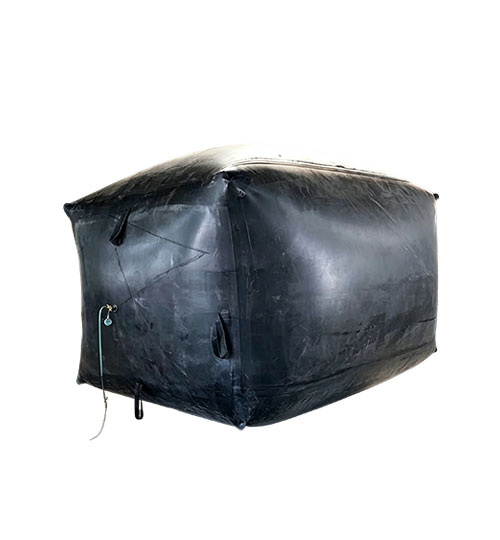
The inflatable void former size determines the final cavity size.
For hollow slabs, the void diameter affects:
Concrete volume
Slab dead weight
Concrete cover
Structural section thickness
If the void former is too large, the remaining concrete section may be insufficient.
If it is too small, the intended weight reduction may not be achieved.
For box girders, cavity dimensions may influence:
Web thickness
Top slab thickness
Bottom slab thickness
Structural weight
Reinforcement clearance
The selected inflatable bridge void former must therefore match structural design requirements.
Concrete cover is one of the most important factors when selecting inflatable bridge void formers.
The former must be positioned so that sufficient concrete remains between the cavity and the external surface.
Insufficient cover can lead to:
Reduced structural capacity
Cracking
Poor durability
Reinforcement exposure
The void former diameter and position should therefore be checked against:
Slab thickness
Reinforcement position
Required cover
Structural drawings
For box girders, top and bottom slab thickness should also be verified.
The inflatable bridge void former must fit inside the reinforcement cage without excessive contact.
Check:
Clear spacing between bars
Prestressing tendon position
Stirrup spacing
Longitudinal reinforcement
End anchorage zones
If reinforcement is too close to the rubber surface, sharp steel edges may damage the void former.
Proper clearance also helps maintain uniform concrete flow.
Before ordering an inflatable void former, review the reinforcement drawing carefully.
Fresh concrete applies pressure to the inflatable void former.
Pressure increases with:
Concrete density
Pouring height
Placement speed
Vibration
Member depth
A large box girder may impose greater pressure on the inflatable bridge void former than a shallow hollow slab.
The selected former must therefore have sufficient pressure resistance.
Material thickness, reinforcement fabric, and operating pressure should match the concrete placement conditions.
Working pressure directly affects void former stability.
If inflation pressure is too low, the inflatable void former may:
Flatten
Distort
Shift
Develop an irregular cavity
If pressure is too high, the rubber body may experience unnecessary stress.
Correct inflation pressure should maintain shape without overloading the material.
Pressure requirements depend on:
Former diameter
Former length
Reinforcement structure
Rubber thickness
Concrete pressure
Shape
The pressure should be monitored before and during concrete placement.
Inflatable bridge void formers are commonly manufactured from reinforced rubber composite materials.
The construction may include:
Inner airtight rubber layer
Reinforcement fabric
Outer protective rubber layer
Valve assembly
The reinforcement fabric is especially important because it limits uncontrolled expansion.
For larger hollow slabs and box girders, stronger reinforcement may be required.
Important material properties include:
Tensile strength
Tear resistance
Abrasion resistance
Airtightness
Flexibility
Aging resistance
A lightweight former may be suitable for smaller cavities, while heavy-duty bridge applications may require thicker reinforced construction.
Shape stability becomes more important as void former size increases.
A small circular inflatable void former may naturally maintain its shape under pressure.
A large box girder former may be more sensitive to:
Sagging
Twisting
Uneven inflation
Local bulging
For box girder applications, reinforced construction and correct pressure distribution are essential.
The former should maintain:
Straightness
Cross-sectional shape
Elevation
Centerline
throughout the concrete pour.
Inflatable void formers contain air and therefore experience buoyancy in fresh concrete.
This is especially important in deep concrete members.
If the former is not properly restrained, it may float upward.
This can cause:
Uneven concrete cover
Incorrect cavity location
Reduced top slab thickness
Structural defects
Hollow slabs and box girders both require restraint systems.
Typical methods include:
Positioning bars
Tie-down systems
Steel frames
Reinforcement-based supports
The restraint method should be designed before concrete placement.
The void former can also move sideways.
Lateral movement may occur if:
Concrete is poured unevenly
Vibration is excessive
Restraints are insufficient
The void former is poorly centered
For long hollow slabs and box girders, even a small lateral shift can create uneven wall thickness.
Balanced concrete placement is therefore important.
Demolding is one of the main advantages of inflatable bridge void formers.
After the concrete gains sufficient strength, the former is deflated.
The rubber body collapses and becomes easier to remove.
However, removal still requires planning.
Consider:
Pulling direction
Opening size
Cavity length
End access
Curvature
Friction
Long box girder cavities can require greater pulling force.
The surface condition and release preparation also influence demolding.
Reuse frequency affects the ideal void former construction.
A former used for a small number of pours may have different requirements than one used in continuous precast production.
For high-volume production, prioritize:
Strong reinforcement
Abrasion resistance
Valve durability
Easy cleaning
Repairability
High reuse efficiency can reduce lifecycle cost.
Precast plants often work on repetitive production schedules.
The inflatable bridge void former must fit the production cycle.
Important questions include:
How quickly can it be installed?
How quickly can it be removed?
How long does cleaning take?
Is a second void former needed while one is being cleaned?
How many pours are planned per day?
For high production volumes, multiple void formers may improve efficiency.
Inflatable rubber formwork is flexible.
Its dimensional accuracy depends on correct inflation pressure and restraint.
If extremely tight cavity tolerances are required, the void former design should be carefully evaluated.
Important factors include:
Reinforcement fabric
Inflation pressure
Mold length
Restraint spacing
Concrete placement control
Rigid formwork may still be preferred for some very high-precision internal shapes.
However, inflatable bridge void formers can provide adequate accuracy for many hollow slab and box girder applications.
When selecting an inflatable void former for hollow slabs, focus on:
Slab thickness
Void diameter
Longitudinal cavity length
Concrete cover
Reinforcement clearance
Buoyancy restraint
Reuse requirements
Hollow slabs often use multiple parallel void formers.
Spacing between adjacent formers is important.
Too little spacing can reduce the concrete web thickness between cavities.
The number and arrangement of inflatable void formers should follow structural design.
Box girders require more detailed evaluation.
Key factors include:
Large cavity size
Long mold length
Complex internal geometry
Concrete placement depth
Higher buoyancy
Difficult removal access
For box girders, custom inflatable bridge void formers may be required.
The mold should be designed according to actual internal dimensions rather than selected from a generic size.
Circular inflatable void formers are simple and stable under pressure.
They are commonly used in hollow slabs.
Oval or elongated shapes may provide greater cavity area within limited slab depth.
However, non-circular shapes require stronger dimensional control.
The choice should depend on:
Structural geometry
Concrete thickness
Weight reduction requirement
Manufacturing capability
Some box girders and special precast elements require non-standard cavities.
Custom inflatable void formers may be designed for:
Rounded rectangular sections
Flat-sided profiles
Tapered cavities
Special bridge beams
Custom shapes generally require stronger internal reinforcement to control expansion.
The inflation valve should be:
Airtight
Durable
Accessible
Easy to connect
For long or large void formers, multiple inflation points may sometimes be useful.
The valve should remain accessible after the former is positioned.
Poor valve placement can make pressure adjustment difficult.
Before every concrete pour, the inflatable bridge void former should be tested for leakage.
A pressure test can identify:
Valve leakage
Punctures
Seam damage
Previous repair failure
Air pressure should remain stable for the required period before installation.
A leaking former should not be used for concrete placement.
Restraint design is critical.
The former should be held at the correct:
Elevation
Centerline
Longitudinal position
Restraints should not create sharp contact points.
They must hold the former firmly without cutting or damaging the rubber.
The required restraint spacing depends on former length and buoyancy.
Concrete should be placed gradually and evenly.
Avoid placing a large amount of concrete on one side first.
Uneven concrete pressure can cause the inflatable bridge void former to shift.
Recommended practice includes:
Balanced placement
Controlled pour rate
Monitoring alignment
Monitoring pressure
For box girders, concrete placement sequencing is especially important.
Concrete vibration improves compaction.
However, vibrators should not strike the inflatable rubber surface directly.
Direct contact may cause:
Abrasion
Puncture
Local deformation
Operators should maintain a safe distance from the void former while still achieving proper concrete consolidation.
Deflation should occur only after the concrete has enough early strength to maintain the internal cavity.
If deflated too early:
The cavity may deform.
Concrete may sag.
Internal dimensions may change.
If deflated too late:
Extraction may become more difficult.
Removal timing depends on:
Concrete mix
Temperature
Cement type
Element size
Production process
There is no single universal demolding time.
After removal, clean the inflatable bridge void former promptly.
Remove:
Concrete residue
Dirt
Release agent buildup
Then inspect:
Surface
Valve
Seams
Repairs
Air retention
Proper cleaning and maintenance improve reuse life.
Inflatable bridge void formers should be stored in a clean, dry, shaded area.
Avoid:
Direct sunlight
High heat
Oil
Solvents
Sharp objects
Open flames
Improper storage can accelerate rubber aging.
Several mistakes can lead to poor results.
Diameter alone does not determine suitability.
Length, pressure, material, reinforcement, and concrete conditions also matter.
A void former that does not fit properly inside the reinforcement cage can be damaged.
Poor restraint can cause the void former to float.
Low pressure can lead to deformation.
A long former may be difficult to remove if access is limited.
Large box girders may require stronger reinforcement than small hollow slabs.
When requesting inflatable bridge void formers, provide complete project information.
Recommended information includes:
Application
Hollow slab or box girder type
Required cavity shape
Diameter or width
Height
Length
Concrete member dimensions
Reinforcement spacing
Concrete placement height
Working pressure
Quantity
Expected reuse cycles
Drawings
Complete information allows the inflatable void former to be matched more accurately to the project.
Before ordering, confirm:
Required cavity dimensions
Void length
Cross-section shape
Concrete cover
Reinforcement clearance
Working pressure
Concrete placement depth
Restraint method
Valve position
Demolding access
Expected reuse
Storage requirements
Quantity
The size should match the required internal cavity while maintaining sufficient concrete cover and structural thickness.
Yes. They are commonly used to create longitudinal cavities inside precast and prestressed hollow slabs.
Yes. Larger or custom inflatable void formers can be used in box girders where internal cavities must be formed.
Use suitable restraints, positioning bars, balanced concrete placement, and correct inflation pressure.
Working pressure depends on the void former size, material, reinforcement, and fresh concrete pressure. The correct pressure should be specified for the actual former design.
Yes. They can be customized in length, diameter, width, height, cross-section, and reinforcement structure.
Reuse life depends on material quality, handling, concrete conditions, cleaning, storage, and damage prevention.
It should be deflated after the concrete gains sufficient early strength to maintain the cavity shape.
Choosing inflatable bridge void formers for hollow slabs and box girders requires more than selecting a standard diameter and length.
The correct inflatable void former must match the internal cavity geometry, concrete member dimensions, reinforcement arrangement, required concrete cover, working pressure, fresh concrete load, buoyancy, demolding access, and expected reuse cycles.
For hollow slabs, key factors include cavity diameter, slab thickness, spacing between voids, reinforcement clearance, and restraint.
For box girders, greater attention should be paid to large cavity geometry, long mold length, pressure stability, buoyancy, shape control, and removal access.
Material construction is also important. Reinforced rubber composite layers help the inflatable bridge void former resist stretching, maintain geometry, and withstand repeated concrete pours.
Correct working pressure is essential. Too little pressure can cause distortion, while excessive pressure can increase material stress.
The void former must also be securely restrained because buoyancy can cause upward or lateral movement during concrete placement.
Concrete should be poured evenly, vibration should be controlled, and the former should only be deflated after the concrete has enough strength to maintain the hollow cavity.
For precast bridge slabs, hollow-core elements, box girders, culverts, and related concrete structures, properly selected inflatable bridge void formers can reduce formwork weight, simplify demolding, improve production efficiency, and support repeated reuse.
A successful selection process should combine structural drawings, cavity dimensions, reinforcement information, concrete placement conditions, working pressure, restraint design, and production requirements.
By evaluating these factors before ordering, contractors and precast producers can choose inflatable bridge void formers that provide stable cavity geometry, reliable construction performance, and better lifecycle efficiency.
SEO Title:
How to Choose Inflatable Bridge Void Formers for Hollow Slabs and Box Girders
Meta Description:
Learn how to choose inflatable bridge void formers for hollow slabs and box girders. Compare cavity size, working pressure, rubber reinforcement, concrete cover, anchoring, demolding, reuse and maintenance requirements for precast and bridge concrete construction.
SEO Keywords:
Inflatable Bridge Void Formers, inflatable bridge void former, inflatable void former for hollow slabs, box girder void former, bridge hollow core mold, inflatable rubber mandrel, inflatable core mold, hollow slab void former, box girder inflatable formwork, bridge void former, rubber inner mold for concrete, precast concrete void former, inflatable formwork for hollow slabs, inflatable formwork for box girders, bridge concrete core mold, reusable inflatable void former, inflatable rubber core mold, hollow core slab formwork, bridge girder void former, inflatable concrete inner mold
Suggested URL Slug:
choose-inflatable-bridge-void-formers-hollow-slabs-box-girders
Этот веб-сайт использует файлы cookie, чтобы обеспечить вам максимально эффективное использование нашего веб-сайта.
 English
 Español
 Portugues
 Français
 Deutsch
 العربية
 Italiano
 Ελληνικά
 हिन्दी


Комментарий
(0)